A practical HRC look at how mentorship supports career growth across teams and markets.
Why mentorship matters in a full-service real estate company
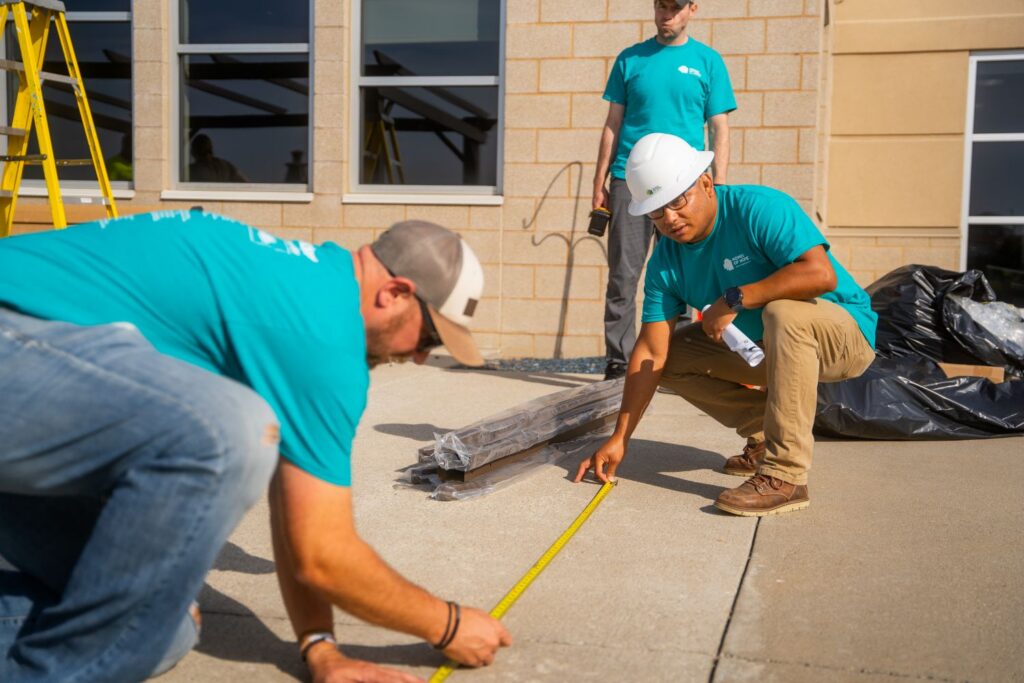
Mentorship builds real estate careers at Hubbell by helping associates learn from experienced leaders, understand the full scope of the business, and grow with more confidence across Iowa and Nebraska. In a company that touches development, construction, property management, and corporate functions, mentorship is one of the clearest ways new talent turns exposure into real progress. As a 170-year-old reliable, experienced, purpose-driven, and collaborative company, Hubbell understands knowledge is passed down through the generations who walk through its doors. Those qualities are especially relevant to mentorship because a company with broad experience and a collaborative culture is well positioned to help people develop through guided learning, not only through trial and error.
“At Hubbell, your work helps shape the places where people live, work, and thrive across Iowa, Nebraska and South Dakota,” said President & CEO Kyle Gamble.
Hubbell has grown by investing in talented professionals who share its passion for shaping communities. The core idea is simple: in a full-service Midwest real estate company, mentorship helps people move from potential to capability faster, and that benefits both associates and the communities they help shape.
How mentorship supports growth across Hubbell
Mentorship supports growth across Hubbell’s real estate platform because the company’s work naturally connects people with different kinds of expertise. In a full-service environment like that, professional growth is rarely confined to one narrow skill set. Associates often learn faster when they can ask questions across functions, observe how other teams think, and gain context that would be difficult to build alone. That is one reason mentorship matters so much in a company like Hubbell.
Someone in finance may benefit from understanding how development timelines affect project decisions. Someone in property management may grow by seeing how early planning choices shape long-term resident experience. Someone entering construction or operations may advance more quickly with access to experienced leaders who can explain not only what to do, but why it matters in the bigger picture. Mentorship helps connect those dots. A collaborative company creates space for questions. An experienced company has knowledge worth passing on. A purpose-driven company helps associates understand how their work contributes to larger community outcomes. Mentorship is where those values become tangible.
External workforce context reinforces the value of this topic. The Greater Omaha Chamber describes Workforce Excellence as a commitment to empowering talent, expanding opportunity, and supporting employer success through recruitment, retention, and professional development initiatives. In Greater Des Moines, the Career Ready Collective program similarly focuses on helping students and emerging talent explore pathways and build skills with employers. These examples make the broader point that mentorship and guided development are increasingly central to talent growth in Iowa and Nebraska.
Why mentorship matters for long-term careers in Iowa and Nebraska
Mentorship matters for long-term careers in Iowa and Nebraska because regional growth still depends heavily on trust, local knowledge, and people who understand how to work well across teams. Hubbell’s 1856 founding is relevant here because long-standing companies often hold deep institutional knowledge that can either stay siloed or be passed forward. The stronger approach is to pass it forward intentionally. For professionals building a career in the Midwest, mentorship can accelerate confidence without shortcutting judgment. That matters in real estate because many decisions have long-term consequences. Development timelines, project budgets, construction quality, resident experience, and community relationships all benefit when emerging professionals can learn from people who have navigated similar situations before. At Hubbell, that value is amplified by the company’s broad service lines and market presence in West Des Moines, Des Moines, Omaha, and beyond. The wider workforce environment makes this topic timely. Iowa Workforce Development positions itself around building a better workforce for the future, offering labor market information, job support, and workforce programs that reflect a highly active employment environment. Nebraska’s 2026 statewide workforce assessment similarly emphasizes the need for skilled workers and stronger talent pipelines. In that context, mentorship is not only good for individual careers. It is good for regional workforce resilience.
Q: Why is mentorship especially important in real estate careers?
A: Real estate work often spans long timelines, multiple stakeholders, and decisions with lasting impact. Mentorship helps professionals build judgment as well as technical skill.
Q: How does HRC’s full-service structure strengthen mentorship?
A: It creates more opportunities to learn across development, construction, management, operations, and corporate functions instead of staying within one narrow lane.
Q: Is mentorship only useful for early-career professionals?
A: No. Mentorship can support growth at every stage, including leadership development, cross-functional learning, and transitions into new responsibilities.
Q: How does this post fit with the careers cluster?
A: It supports [INTERNAL LINK TO: Real Estate Career Paths at HRC] and pairs naturally with [INTERNAL LINK TO: Why Cross-Functional Experience Matters in Real Estate Careers].
Q: Where can readers explore roles at HRC?
A: Readers can visit Career Listings – Hubbell Realty Company to see current openings.