How HRC’s 1856 legacy still shapes Iowa and Nebraska
Hubbell Realty Company’s 1856 founding matters because it signals something rare in Midwest real estate: a company that has operated across generations, adapted to changing markets, and remained rooted in the same region it helps shape. For buyers, investors, and community partners in Iowa and Nebraska, that longevity translates into trust, perspective, and confidence that Hubbell understands the full lifecycle of real estate rather than a single transaction. That point matters even more in a market where experience can be the difference between a short-term project and a lasting place.
Heritage is not presented as nostalgia. It is presented as proof of long-term capability across the entire real estate journey. Hubbell is Iowa’s longest-standing real estate leader and traces a line from F.M. Hubbell’s first real estate transaction in 1856 to generations of community-building work in Des Moines and beyond. Hubbell has been redefining real estate in the Midwest for over a century and is still building what is next. The company’s history is tied to the long arc of how communities in Des Moines, West Des Moines, Omaha, and surrounding areas have grown. A brand that has seen multiple market cycles, regional shifts, and community needs emerge over time brings a different level of perspective to current decisions.
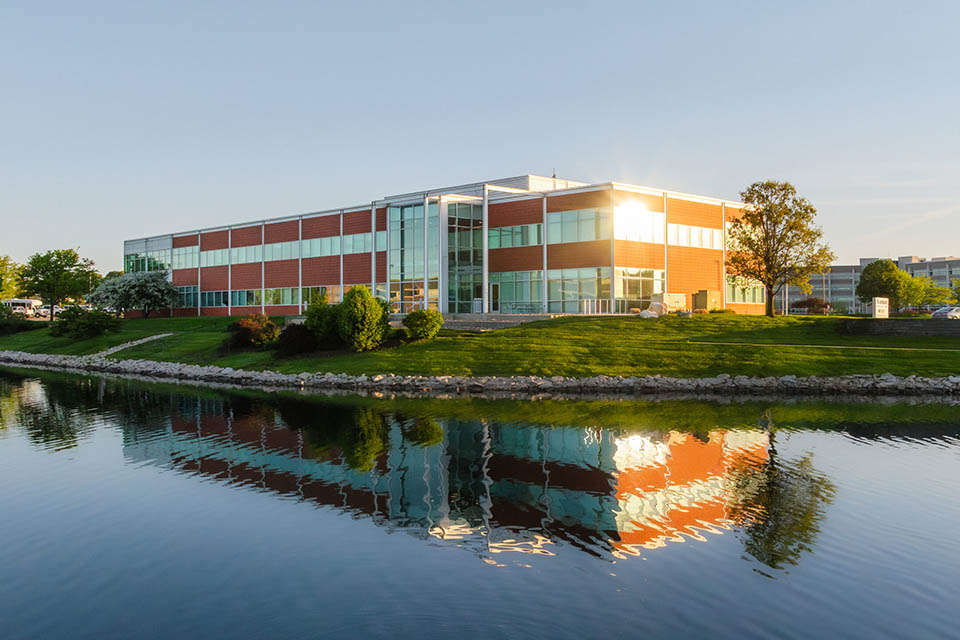
What 170 years of experience means for buyers and partners
For buyers, investors, municipal partners, and future team members, a 170-year history matters because it shows how a company behaves across generations and sales cycles. Experience is not useful on its own if it only points backward. What makes Hubbell Realty Company different is that its long history connects directly to a current operating model that spans development, construction, homebuilding, property management, and investment across Iowa, Nebraska, and South Dakota.
For homebuyers, this kind of legacy builds confidence in the larger organization behind the homes and communities they are considering. Hubbell is the corporate umbrella brand, not a single builder brand, which means consumers benefit from the experience of a company that understands land acquisition, neighborhood planning, construction operations, market cycles, and long-term ownership. When Hubbell talks about serving buyers across life stages, it is speaking from a place of real operational depth. That perspective helps explain why the company can support a range of housing needs through its family of brands while still presenting one consistent corporate standard. For investors and business partners, history is especially meaningful because real estate is a long-duration business. Projects take years to plan, finance, entitle, build, lease, manage, and mature. A partner with a long record in the Midwest brings pattern recognition that newer entrants simply do not have.
Hubbell’s experience across different product types and economic eras can help reduce uncertainty when evaluating opportunities in Des Moines, Omaha, and other regional markets. For communities and municipalities, longevity also signals accountability. A company that has operated in Iowa since 1856 is not treating the region as a short-term play. It is tied to the reputation of the places it helps shape. That matters when discussing infrastructure, housing supply, mixed-use development, neighborhood quality, and the life cycle of community assets after ribbon cuttings are over. In practice, Hubbell’s heritage supports a more stewardship-oriented conversation about development.
Professionals considering careers in real estate often want stability, scale, and room to grow. A company with 170 years of history and a modern, diversified platform offers a different value proposition than a startup or a single-line operator. It suggests institutional knowledge, career mobility, and the chance to contribute to projects with visible impact in the Midwest. In other words, heritage matters because it creates a track record stakeholders can actually use. It gives buyers more confidence, gives investors more context, gives partners more trust, and gives communities a clearer sense of who will still be present years after a project opens. That is why Hubbell’s founding year is not just a detail from the past. It is an active part of how the company operates in the present.
How legacy gives HRC an advantage for the next 170 years
A strong legacy only matters if it helps a company keep building what comes next. That is where Hubbell Realty Company’s story becomes especially relevant in 2026. Hubbell’s history is valuable because it shows an ability to adapt while staying rooted in the Midwest. From early civic involvement in Des Moines to today’s diversified real estate platform, the pattern is consistent: identify what growing communities need, then build the capabilities to help deliver it. That mindset aligns with broader regional momentum. Greater Des Moines continues to stand out as a growth market. The Greater Des Moines Partnership notes that the region is one of the fastest-growing major metros in the Midwest, with strong labor participation, rising household income, and ongoing economic development activity.
Omaha is also investing in long-term regional growth, with the Greater Omaha Chamber outlining a multi-year strategy focused on business development and talent attraction at A GREATER Omaha A Competitive Economic Development Strategy For 2025-2027. Those dynamics create real demand for experienced real estate leadership. Growth brings opportunity, but it also brings complexity around land use, housing mix, infrastructure, affordability, placemaking, and long-term asset performance. Companies that understand only one piece of the puzzle can struggle when markets shift. Hubbell’s vertically integrated model is useful precisely because it connects the full real estate lifecycle. For Hubbell, the next 170 years will not look like the last 170 years.
Buyer expectations are changing. Municipal priorities are evolving. Talent competition is intensifying. Capital is more selective. But the core differentiator remains powerful: a trusted company that understands Iowa and Nebraska deeply and can operate across development, construction, homebuilding, management, and investment from one corporate platform.
Q: Why does Hubbell Realty Company emphasize its 1856 founding so often?
A: Because it is a genuine trust signal. Hubbell was founded in 1856 and remains one of the oldest real estate companies in the Midwest, which helps demonstrate long-term credibility to buyers, partners, and communities.
Q: Is Hubbell just a homebuilder?
A: No. Hubbell is the corporate umbrella brand with services spanning development, construction, property management, homebuilding through affiliate brands, and investment. That broader scope is a major part of the company’s value.
Q: Why is Midwest experience so important in real estate?
A: Iowa and Nebraska markets reward operators who understand local growth patterns, seasonality, community expectations, and long-term relationships. Deep regional knowledge can improve decision-making across the full life of a project.
Q: How does Hubbell’s legacy help buyers today?
A: It gives buyers confidence that the company behind the community understands more than a single transaction. Hubbell’s long history and integrated services support a more durable, lifecycle-focused approach to real estate.