How to compare location, commute, and daily convenience
The best way to compare new home communities in Iowa and Nebraska is to start with how you want to live, not just what a neighborhood advertises. Buyers make stronger decisions when they compare location, commute, schools, amenities, long-term convenience, and builder fit together rather than treating them as separate choices.
A community is more than a sales location. It is part of a longer real estate journey shaped by stewardship, market insight, and the reality of everyday life in Iowa and Nebraska. For many buyers, the temptation is to start with visible features: a clubhouse, trails, a striking entrance, or a model home that photographs well. Those details matter, but they are not enough on their own. A community that looks ideal on a Saturday tour may feel less ideal once you account for commute time, school preferences, grocery access, traffic patterns, or whether the surrounding area is growing in the way you expect. The strongest comparisons start with practical filters. How close is the community to where you work and spend time? Does it match your price point and desired maintenance level? Is it in a Des Moines- or Omaha-area corridor that aligns with your long-term goals?
How Hubbell buyers should evaluate amenities, builders, and fit
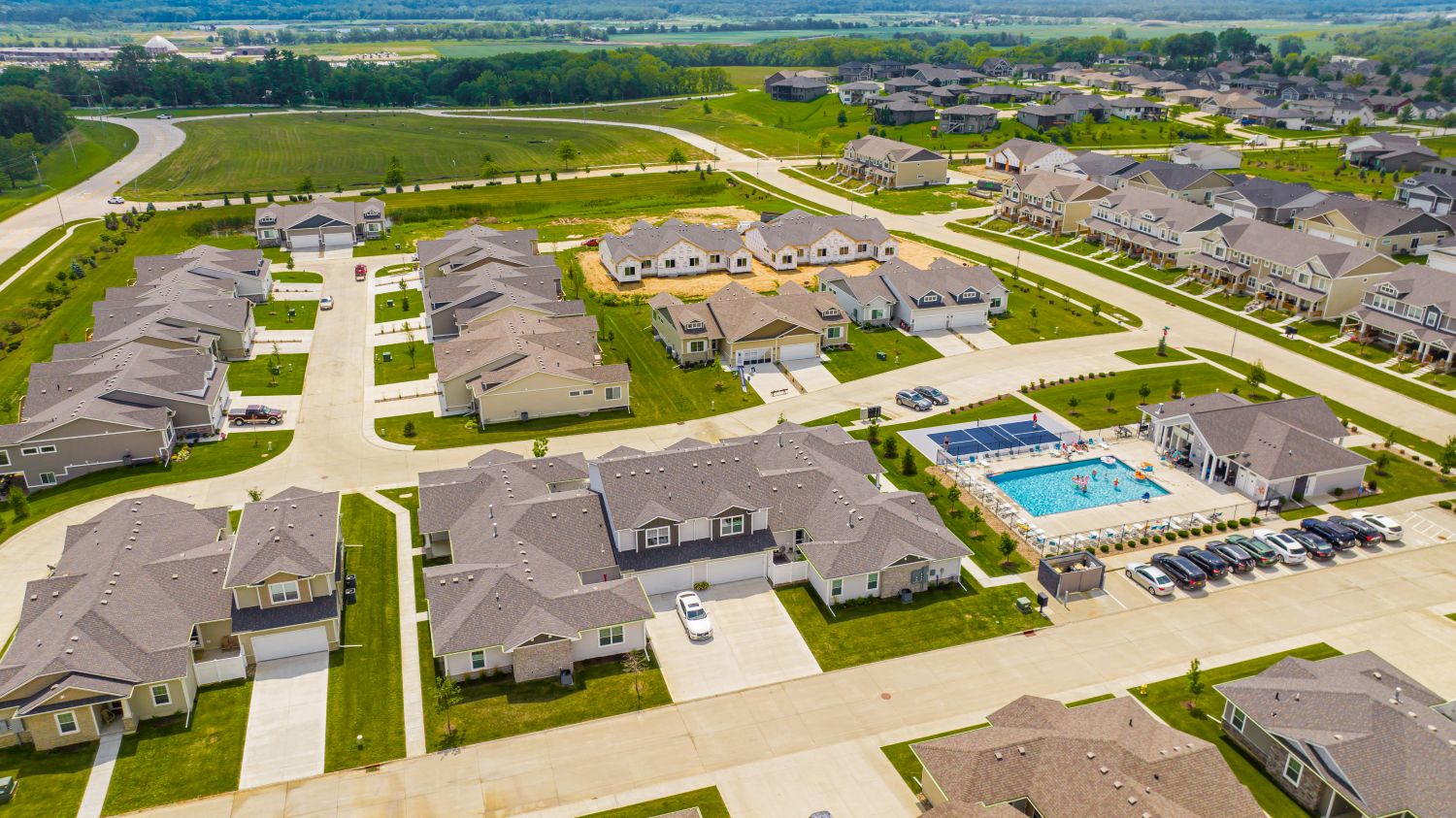
Amenities are important, but they only matter when they fit the way a buyer actually wants to live. A trail system sounds attractive, but its value depends on whether you will use it. A community pool may be a major plus for one family and mostly irrelevant for another. The most useful way to compare communities is to separate marketing features from lifestyle fit, then evaluate which builder and neighborhood combination gives you the strongest long-term match.
Because Hubbell operates across the full real estate lifecycle and supports multiple homebuilding brands, it can look at community choice more broadly than a single-site sales pitch. Hubbell’s “a real estate company for your entire life,” shaped by market insight, craftsmanship, and long-term stewardship.
Start with everyday convenience. How close is the community to work, school, grocery trips, healthcare, and the places you visit every week? Then look at neighborhood pattern and design. Are sidewalks, green space, gathering areas, and nearby services part of daily life, or are they mostly brochure features? After that, evaluate the homebuilding path itself. Some buyers in the Des Moines metro may be best served by an attainable or move-up offering through Hubbell Homes. Some Greater Omaha buyers may find the right fit through The Home Company. Buyers seeking more personalization especially in rural areas and the country may lean toward Origin Homes or while those central to Des Moines may choose Embarq Signature Homes. The question is not which brand is universally best. The question is which homebuilder best fits the community, timeline, and price point you need.
National consumer guidance also supports this comparison mindset. NAHB recommends that buyers prioritize must-haves versus nice-to-haves before shopping, which is especially important when multiple communities seem appealing on first visit. Buyers can revisit Guide to Buying a Home | NAHB. If you are considering a true build-from-scratch or more customized path, NAR’s consumer guide also explains the timeline and loan differences among land purchase, custom construction, and other forms of new construction. A good community comparison is really a filter for better decisions. It helps buyers avoid choosing a neighborhood for one attractive detail while overlooking the factors that matter more after move-in.

How to compare communities with long-term confidence
The final step in comparing communities is to think in longer time horizons. It is easy to focus on the first impression of a model home or entrance monument, but strong community decisions are usually based on how a place will support your routine, finances, and future flexibility over five to ten years.
A good neighborhood is not just attractive at opening. It should continue to make sense as household needs change, whether that means school transitions, work shifts, remote work, aging-in-place considerations, or simple day-to-day convenience. Practical questions help here. Will this location still work if my commute changes? Are nearby services and retail improving? Does the community feel connected to the metro around it, or isolated from it? If I need to move sooner than expected, is the community in a corridor with healthy demand? These are not purely speculative questions; they are part of responsible homebuying.
Regional market context matters too. NAR’s Region VIII assessment highlights economic strengths across Iowa and Nebraska, including central geography, strong business conditions, and sector diversity that support ongoing market activity. Those broader fundamentals help explain why well-located communities in the Des Moines and Omaha regions continue to attract attention from buyers who want both lifestyle value and long-term confidence.
Q: What is the most important factor when comparing new home communities?
A: Usually location and day-to-day fit. Amenities matter, but commute, schools, services, and long-term convenience tend to shape satisfaction more than any single feature.
Q: Should I choose the builder first or the community first?
A: In many cases, they should be evaluated together. The right HRC family brand depends on the community, budget, timeline, and level of customization you want.
Q: Why compare communities from the HRC perspective?
A: Because HRC can connect community choice to a broader range of builder options and long-term real estate expertise. That helps buyers think beyond one listing and toward the full fit of the decision.
Q: Are amenities always worth paying more for?
A: Only if they align with how you actually live. A feature that looks impressive on a tour may add less value than proximity, layout, or monthly affordability.
Q: What should I read next?
A: Continue with Explore Hubbell’s Homebuilders