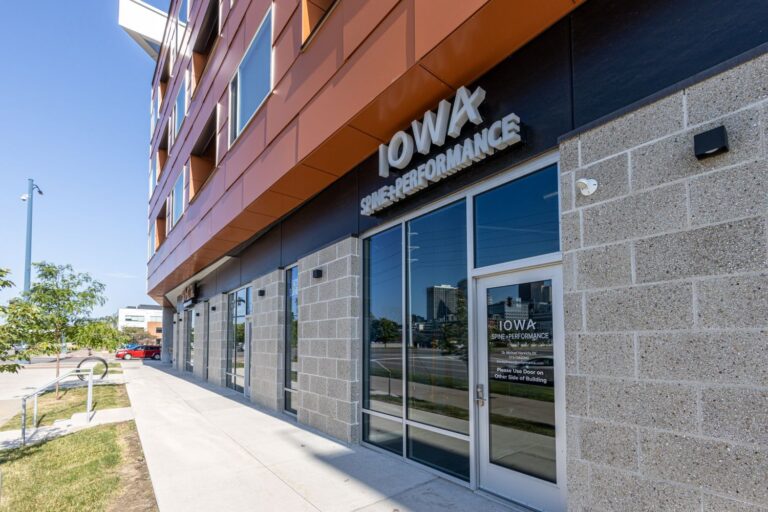
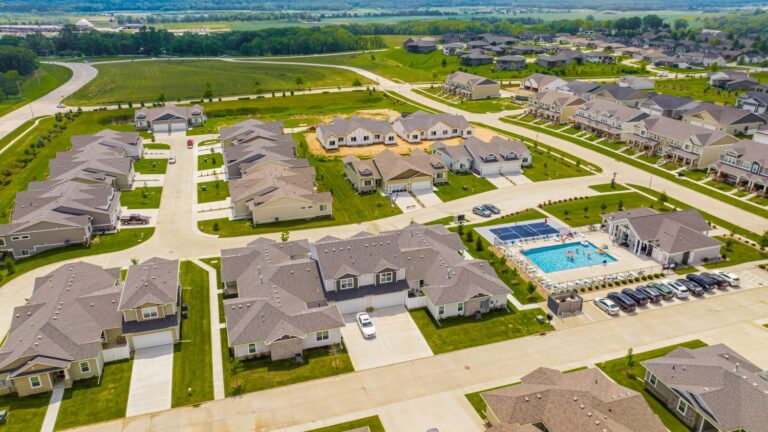
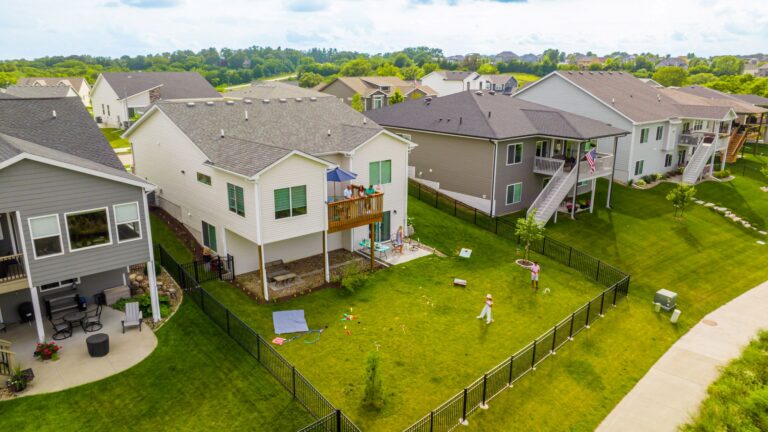
What this guide covers: This pillar explains how community development works in Iowa and Nebraska, why Des Moines and Omaha matter so much to the regional story, and how Hubbell Realty Company’s long-term approach fits the way Midwest communities grow.

What community development means in Iowa and Nebraska
Community development in Iowa and Nebraska is about creating places that can support growth over time, not just adding buildings to a map. The strongest communities balance housing, infrastructure, commerce, and quality of life so residents, businesses, and local partners can thrive together. For Hubbell, it is the difference between a project that simply fills space and a development approach that creates lasting value for a region.
Hubbell Realty Company is a full-service real estate development company headquartered in West Des Moines and founded in 1856. Hubbell delivers innovative solutions shaped by market insight, craftsmanship, and long-term stewardship, creating places where people live, work, and thrive. That positioning matters because community development is one of the clearest expressions of Hubbell’s umbrella brand promise: a real estate company for the real world. It naturally connects development, homebuilding, property management, investment, and civic stewardship into one ongoing regional story.
In Iowa and Nebraska, that story is especially relevant because growth remains practical, visible, and local. Des Moines and Omaha continue to attract people, businesses, and investment, but the real opportunity is not simply more growth. It is better-aligned growth. Communities need housing in the right locations and price points, retail and services that support daily life, infrastructure that keeps pace, and development partners that understand the long game. That is why this topic is stronger than a generic real estate trends article. It allows Hubbell to speak directly to the forces shaping its core markets while reinforcing the company’s heritage and breadth. Hubbell highlights a vertically integrated approach, more than 170 years of experience, and a commitment to creating lasting value for future generations. The company’s History page shows that community-building has been part of the business since the beginning, tracing Hubbell’s legacy from 1856 through transportation, water, downtown redevelopment, residential land development, and philanthropy across Iowa and beyond.
Hubbell’s interest in community development is not new. It is part of a regional operating history that stretches back generations.
Why Des Moines and Omaha lead the regional growth story
Des Moines and Omaha lead the regional growth story because they combine population momentum, business investment, and the kind of cross-sector collaboration that makes community development more durable over time. For Hubbell Realty Company, those metro dynamics matter because they shape the broader Iowa and Nebraska markets where the company develops, builds, manages, and invests. That corporate perspective is especially useful in metros where growth creates both opportunity and complexity.
Greater Des Moines continues to stand out nationally. Recent regional analysis reported by the Greater Des Moines Partnership shows the broader area nearing one million residents, with population up 13.4% over the past decade, real GDP up more than 30%, and employment growth ranking first among Midwest peers. Additional 2026 regional data shows a population of 868,623 across the Partnership Region, median household income of $82,546, and a cost of living 15.9% below the U.S. average, all of which help explain why the metro continues to attract households and employers.
Omaha tells a complementary story. The Greater Omaha Chamber’s current strategy emphasizes strategic business growth, talent attraction, and regional competitiveness across an eight-county Nebraska and Iowa footprint. That matters because community development is strongest when economic development and placemaking reinforce one another. A region can add jobs without creating vibrant places, and it can build attractive places without enough economic energy to sustain them.
Des Moines and Omaha are important because both metros increasingly show the combination. For Hubbell, this metro leadership connects directly to corporate capabilities. A company that spans land development, construction, homebuilding through affiliate brands, commercial and multifamily management, and investment can interpret growth from multiple angles at once. Hubbell can consider what new housing is needed, what commercial uses support daily life, how infrastructure affects future value, and how developments will perform after they open. That full-lifecycle perspective is part of what makes the company relevant to buyers, investors, municipalities, and community stakeholders. The point is not that every corridor needs the same product or pace. The point is that strong community development responds to each metro’s actual pattern of growth. Some areas may need housing diversity and neighborhood-serving retail. Others may need infrastructure coordination, multifamily options, or mixed-use districts that bring daily activity closer together.
How Hubbell helps communities grow with long-term perspective
Hubbell helps communities grow with long-term perspective by approaching development as a lifecycle rather than a moment. In practical terms, that means thinking beyond land acquisition or construction timing and asking what kind of place a project will become years after the ribbon cutting. That perspective matters because community development decisions last. Street layouts, land use patterns, open space, housing mix, access to jobs, and neighborhood services all influence how a community functions over time. A strong corporate real estate partner looks at those decisions together. It can connect planning decisions to operational realities and connect near-term demand to long-term value. Hubbell’s own public-facing story reinforces that role.
Hubbell has been redefining real estate in the Midwest for over a century and highlights its vertically integrated approach, community philanthropy, and commitment to lasting value for future generations. The History page shows that this long-range mindset is not new. It traces a legacy from F.M. Hubbell’s first transaction in 1856 through infrastructure, transportation, water, land development, housing, community philanthropy, and the 2019 addition of Omaha-based operations to the Hubbell family.
That kind of history does not guarantee better development by itself, but it creates a stronger standard. A company that has served the Midwest for 170 years should be thinking carefully about how projects affect communities over time. That means considering more than immediate absorption or sale velocity. It means evaluating whether a development adds usable open space, supports neighborhood connectivity, expands housing options, strengthens a corridor, or helps a metro compete for talent and investment. It also means acting like a partner that will still be present after a project is complete. For readers, the practical takeaway is that community development works best when it is guided by organizations that understand both the business side and the community side of real estate. Hubbell’s corporate role is especially relevant because it sits above any single affiliate brand and reflects the wider story of how places are planned, built, and sustained across Iowa and Nebraska.

Q: What does community development mean in real estate?
A: It means planning and building places in ways that support long-term livability, economic activity, and quality of life, not just short-term transactions.
Q: Why is this an HRC topic instead of a single-builder topic?
A: Because community development spans land, construction, housing, management, and investment. HRC’s corporate perspective is broader than any one affiliate brand.
Q: Why do Iowa and Nebraska matter so much here?
A: They are HRC’s core markets, with Des Moines and Omaha serving as the region’s most important growth anchors.
Q: How does HRC’s 1856 founding help readers trust this perspective?
A: The HRC knowledge vault confirms HRC was founded in 1856, giving the company unusually deep regional experience across multiple market cycles.